
The deadline is approaching. Here's how organizations can turn DPDP requirements into an actionable compliance roadmap.
May 2027 should not be the year your organization starts preparing for DPDP. It should be the year your preparation is put to the test.
For business leaders, the challenge is no longer just understanding India's Digital Personal Data Protection (DPDP) Act. It is ensuring that the organization has the people, processes, and technology to put its privacy obligations into practice.
A privacy policy may define how personal data should be handled. But can your organization identify where that data resides? Can it manage consent withdrawals? Can it respond to data principal requests and demonstrate what action was taken?
These are operational questions and answering them requires more than documentation.
With the substantive provisions of the DPDP Act and Rules scheduled to take effect on 13 May 2027, organizations need a structured approach to preparation.
The path to readiness starts with understanding your current position, addressing operational gaps, and establishing processes that can be monitored and improved.
The Real Challenge: Turning Requirements into Readiness
DPDP compliance touches several business functions, including technology, legal, security, customer service, and leadership.
However, these teams may work with different systems, records, and processes. As a result, an organization can have documented privacy policies without having a complete operational picture.
For example, a business may have a consent policy but lack a coordinated way to handle withdrawal requests across its systems. It may maintain a processing register that does not reflect recent changes in its data environment. It may have a breach-response plan without clearly defined responsibilities across departments.
These gaps highlight an important distinction: having a compliance framework does not automatically mean an organization can execute it.
To prepare effectively, businesses need to move from individual compliance activities towards a connected and measurable approach.
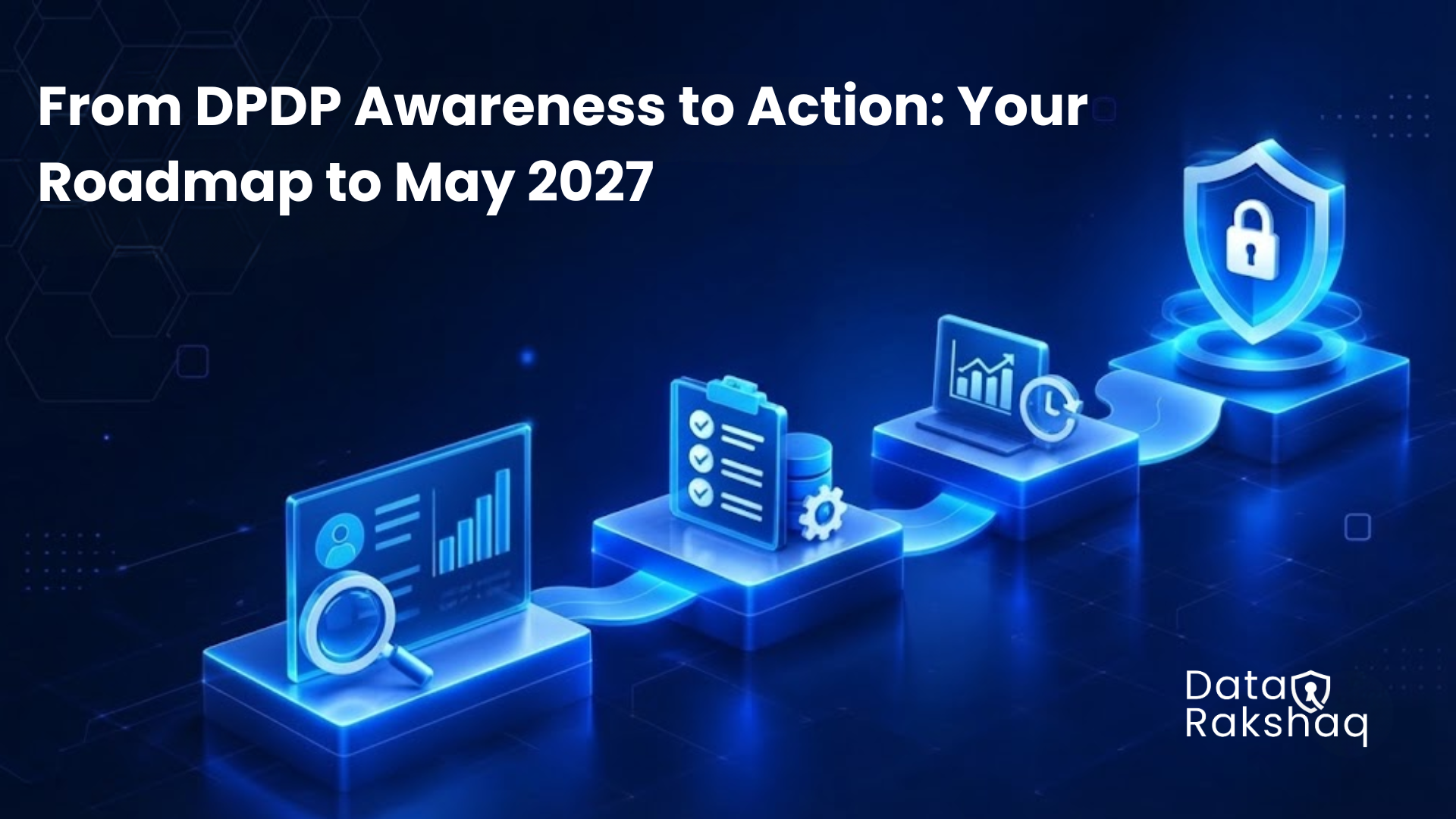
The Road to May 2027: A Three-Stage Action Plan
Rather than treating the deadline as a last-minute milestone, organizations can structure their preparation into three stages.
Stage 1: Assess — Understand Where You Stand
The first step is to establish a clear picture of your current privacy operations.
Before introducing new tools or processes, organizations need to understand how personal data is collected, stored, used, shared, and retained.
This assessment should include:
Identifying personal data across business systems.
Reviewing existing consent collection and withdrawal processes.
Assessing the accuracy of processing records.
Identifying gaps in data principal request handling.
Reviewing breach-response procedures and responsibilities.
Examining how third-party processors are managed.
The objective is to identify what is already in place, what is missing, and which gaps require attention.
DataRakshaq's data discovery, classification, and governance capabilities can support this assessment by helping organizations develop greater visibility into their data and privacy operations.
The outcome: A clearer understanding of your current compliance position and the areas requiring action.
Stage 2: Implement — Turn Gaps into Operational Processes
Once the gaps are identified, the next step is to address them.
Organizations should focus on establishing repeatable processes rather than relying entirely on manual coordination.
Key areas include:
Data discovery and classification: Establish visibility into personal data and organise it according to its sensitivity and business context.
Consent management: Create structured processes for collecting, recording, and managing consent, including withdrawal requests.
RoPA management: Maintain processing records that reflect the organisation's actual data-processing activities.
Data principal requests: Establish workflows for receiving, verifying, assigning, tracking, and responding to requests.
Breach management: Define responsibilities, escalation procedures, and processes for maintaining incident records and supporting notifications.
Third-party governance: Review how processors handle personal data and how relevant privacy obligations are communicated and monitored.
DataRakshaq brings several of these activities together through its connected privacy management capabilities, helping organizations reduce fragmentation between individual compliance processes.
The outcome: Defined workflows, clearer ownership, and a more structured approach to managing privacy obligations.
Stage 3: Monitor — Make Compliance an Ongoing Process
Implementing a process is not the same as ensuring it continues to work.
Business operations are evolving. New applications are being introduced, vendors change, and new processing activities emerge. Privacy processes need to keep pace with these changes.
Organizations should establish regular reviews to evaluate whether their processes remain effective.
This includes:
Reviewing changes in data inventory and processing activities.
Monitoring consent and privacy request workflows.
Tracking outstanding compliance tasks.
Reviewing breach-response readiness.
Maintaining records and evidence of actions taken.
Reporting progress and unresolved gaps to leadership.
DataRakshaq's governance and analytics capabilities can help teams monitor compliance activities and maintain visibility in their progress.
The outcome: A continuous approach to privacy governance that can adapt as the organisation changes.
What Should Leadership Priorities Before May 2027?
For executives, preparation needs to be translated into clear responsibilities and measurable progress.
A practical action plan should address four questions:
1. What needs to be completed?
Identify the operational and governance gaps that need to be addressed before the applicable compliance deadlines.
2. Who is responsible?
Assign ownership across legal, compliance, IT, security, and business teams. Make sure responsibilities are clearly understood.
3. How will progress be measured?
Establish meaningful indicators such as data inventory coverage, processing record completeness, request-handling progress, and the status of outstanding remediation activities.
4. How will the organization demonstrate its progress?
Maintain supporting records, audit trails, and evidence of the processes being followed.
These questions can help leadership move beyond general compliance discussions and focus on concrete implementation.
How DataRakshaq Supports the Journey to May 2027
A structured preparation plan needs systems that support its execution.
DataRakshaq is designed to help organizations manage key areas of DPDP compliance through a unified platform.
Its capabilities support the three stages of the roadmap:
Assess: Data discovery and classification help organizations understand where personal data resides and how it is organized.
Implement: Consent management, RoPA, DSAR workflows, and breach management help teams operationalize important privacy processes.
Monitor: Governance, analytics, and audit trails help organizations track activities, maintain evidence, and review compliance progress.
By connecting these capabilities, DataRakshaq helps organizations move from isolated compliance tasks to more coordinated privacy operations.
For leadership, this creates an opportunity to connect compliance planning with the day-to-day management of personal data.
May 2027 Is a Milestone. Readiness Is Work.
The transition to the DPDP framework should not be approached as a single project that ends when a deadline passes.
Organizations need processes that remain useful as their data environments, business operations, and regulatory responsibilities evolve.
That means preparation should begin with an honest assessment, continue through implementation, and become part of ongoing governance.
The organization’s immediate priority should be to identify their gaps, establish clear ownership, and build a practical roadmap that reflects their operations and applicable obligations.
A deadline tells you when to be ready. A clear action plan helps you get there.
Conclusion: Move from Awareness to Execution
The road to May 2027 requires more than regulatory awareness. It requires organizations to turn requirements into processes, assign accountability, and establish the ability to demonstrate what has been done.
A structured approach—Assess → Implement → Monitor—gives businesses a practical way to organize their preparation and track progress.
With DataRakshaq, organizations can bring data discovery, consent management, RoPA, DSAR workflows, breach management, and governance together in one platform to support their DPDP compliance journey.
Start with visibility. Build the processes. Keep improving.
Your May 2027 readiness begins with the actions you take today.